Device built-in
KrosFlow Tangential Flow Filtration (TFF) System: An Integrated and Efficient Solution for Laboratory Concentration and Buffer Exchange
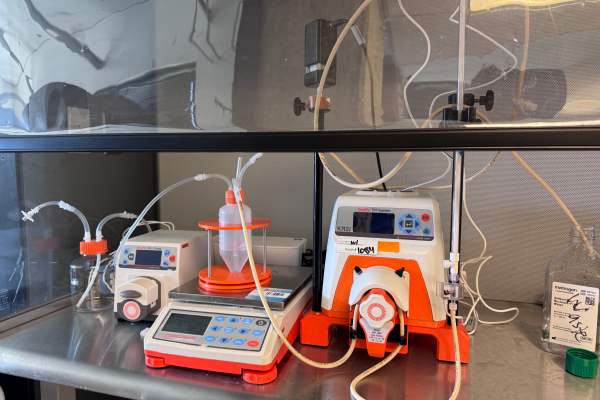
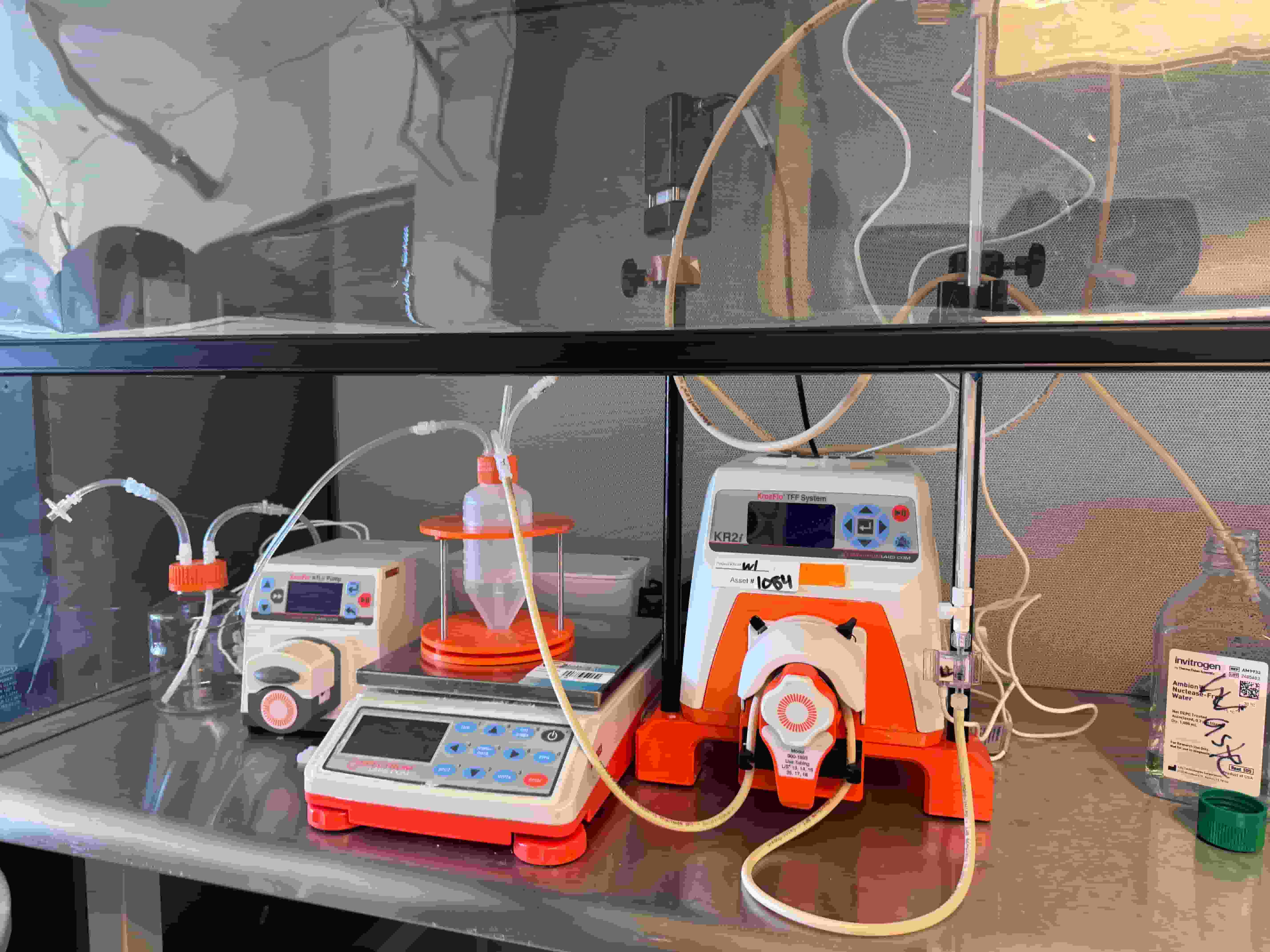
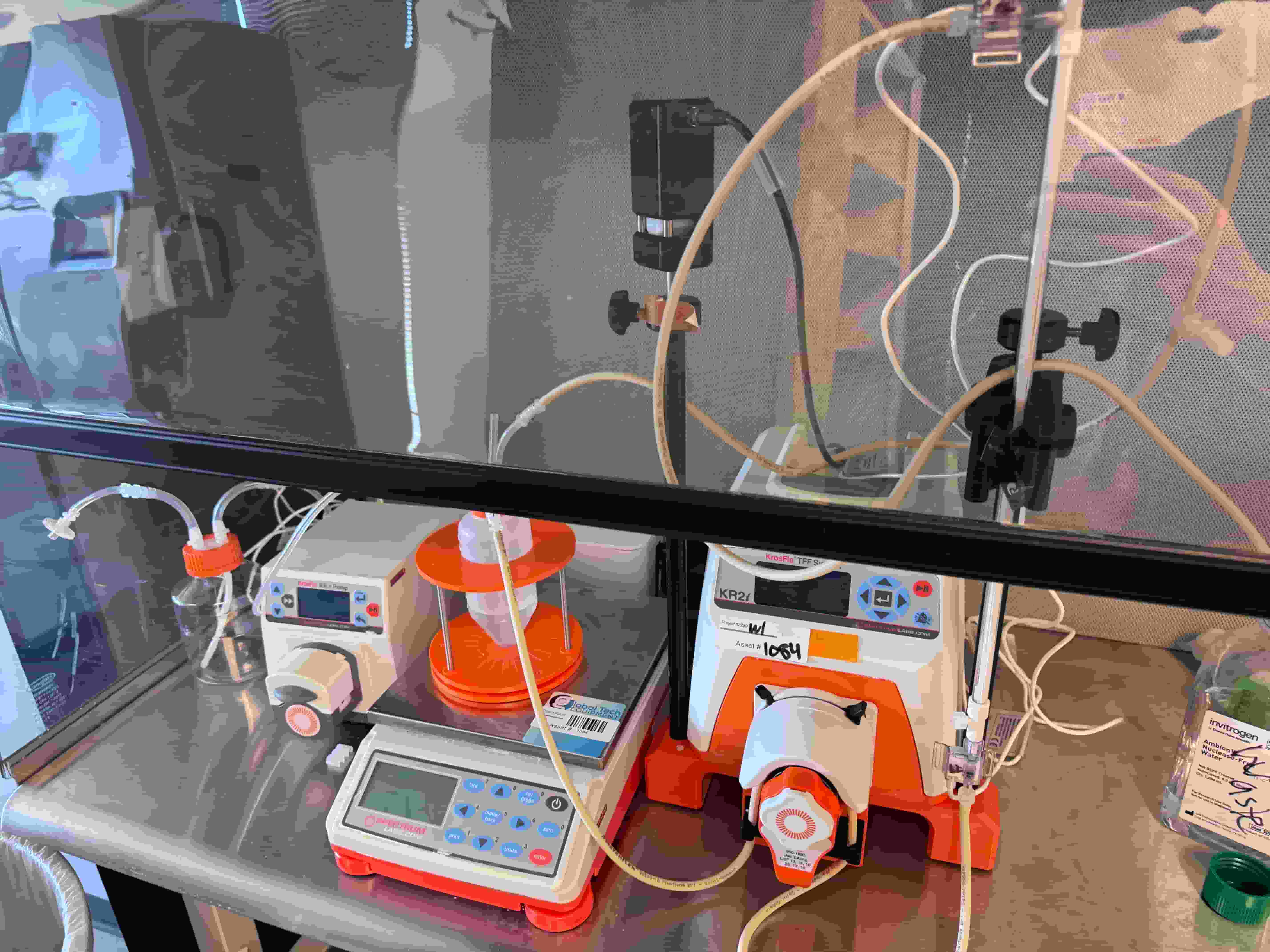
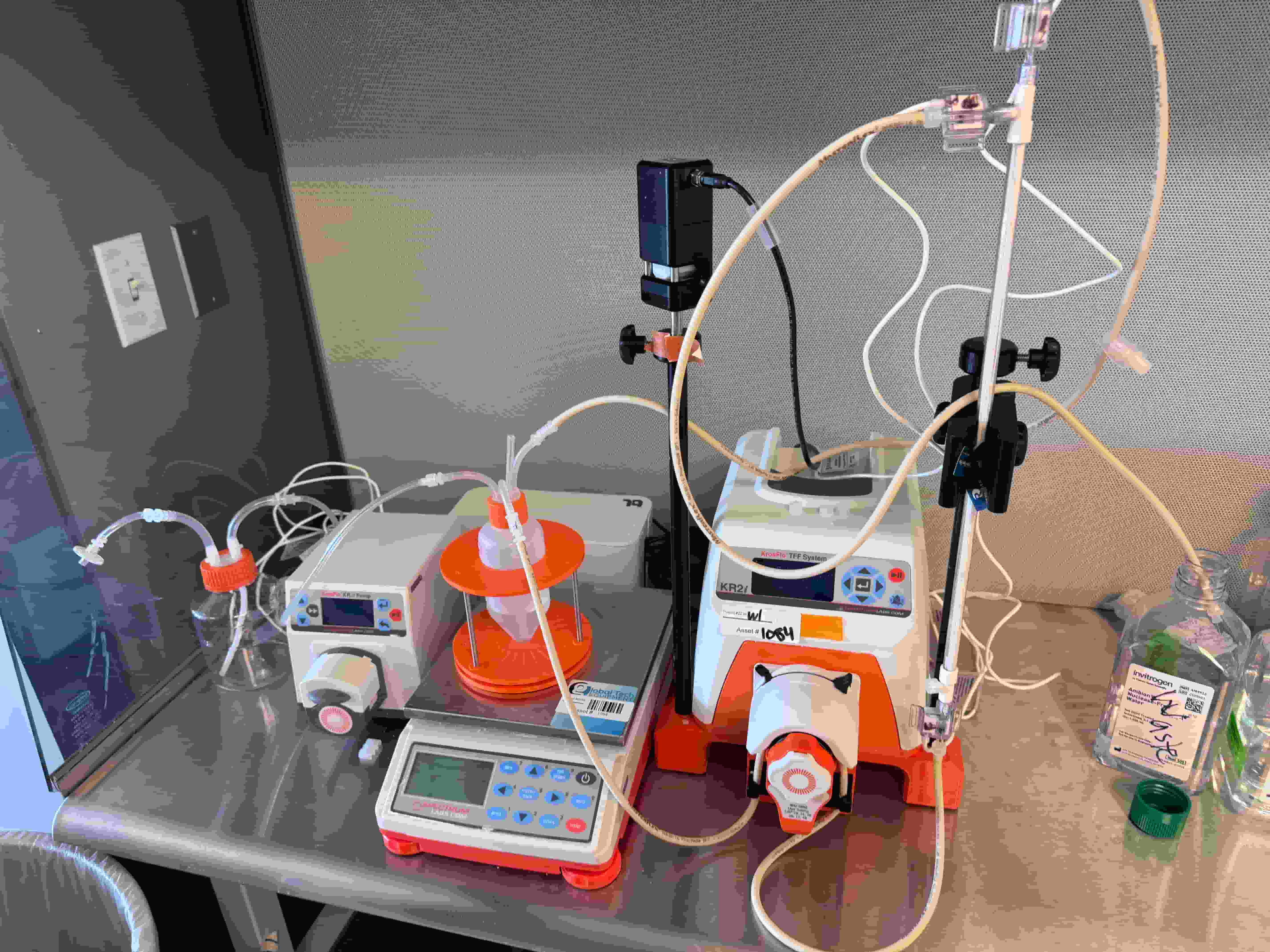
In many stages of biopharmaceuticals, cell therapy, antibody development, and life sciences research, critical steps such as sample concentration, desalting, buffer exchange, or purification are paramount. Tangential Flow Filtration (TFF) technology, known for its advantages of large processing capacity, low fouling tendency, and high recovery rates, has become the gold standard for these applications. The KrosFlow TFF System is designed to meet the needs of lab-scale and small-to-medium process development, offering an integrated, user-friendly, and high-performance platform. Its standard inclusion of a balance, peristaltic pump, and accessories ensures the user can start experiments quickly right out of the box.
1. Core System Components & Integration Advantages
Unlike systems requiring users to assemble disparate components, the KrosFlow TFF System provides a highly integrated platform. Its core advantage lies in the organic combination of key components, ensuring operational simplicity and result reliability.
Main Unit:
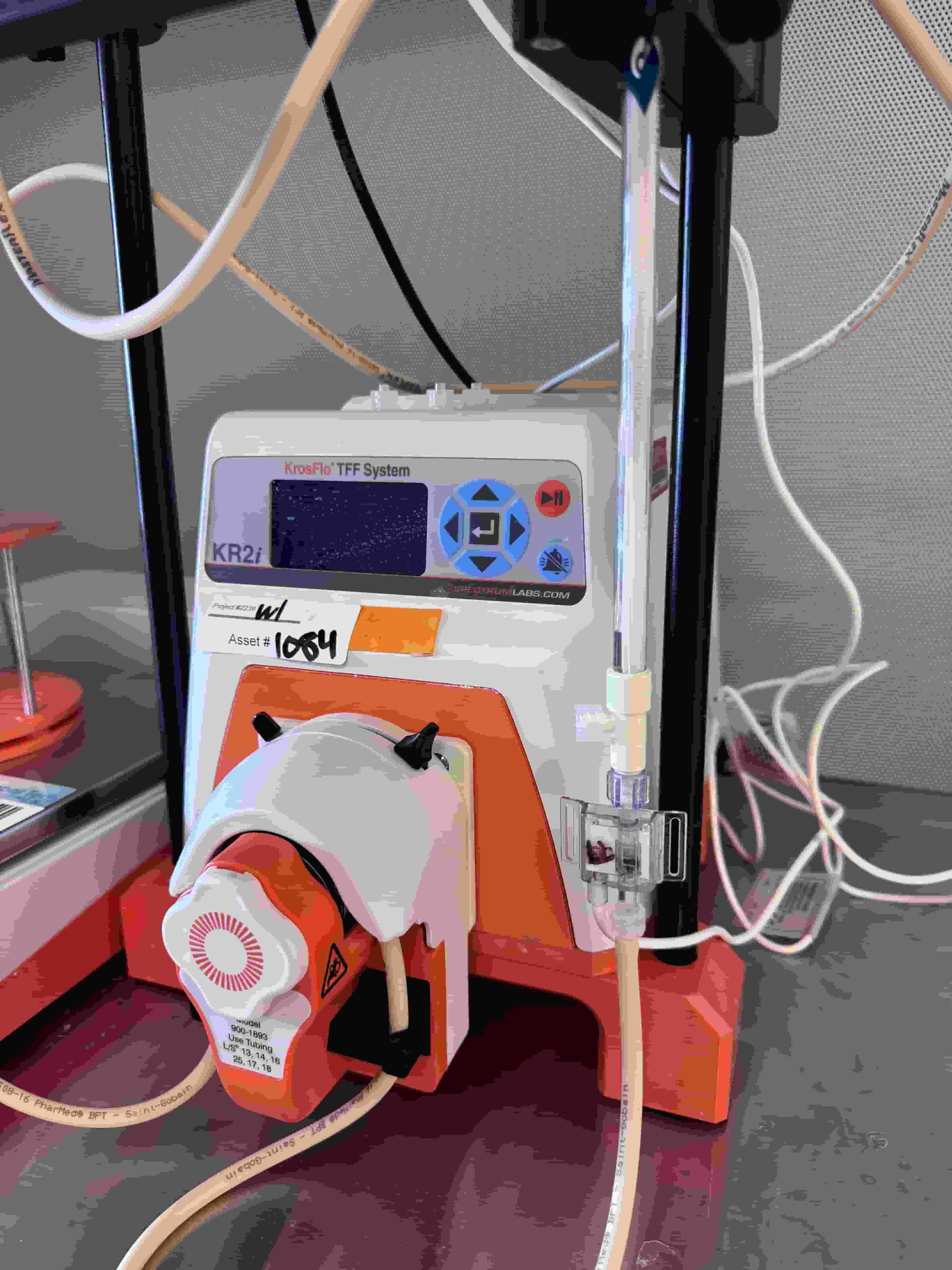
The main unit is compact and robustly constructed, typically featuring an intuitive color touchscreen interface for controlling and monitoring all operating parameters. It often integrates sensors for inlet (feed) and outlet (permeate) pressures, which are critical parameters for optimizing TFF processes.
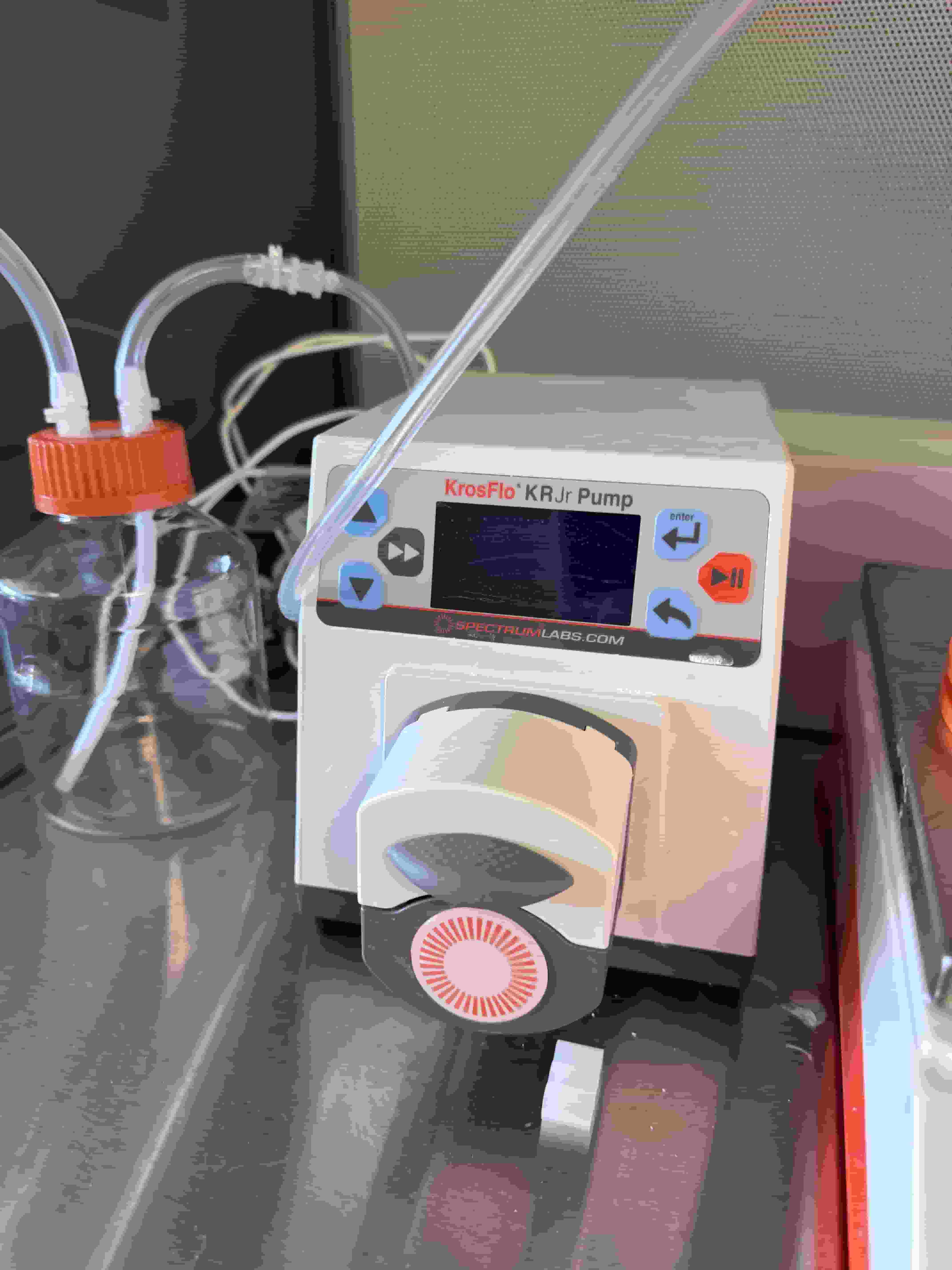
Peristaltic Pump:
The peristaltic pump is the "heart" of the TFF system, responsible for driving the tangential flow of the sample across the membrane surface. The pump included with the KrosFlow system typically features:
Precise Flow Rate Control: Provides stable and accurately repeatable flow, ensuring stable Transmembrane Pressure (TMP), which is crucial for maintaining filtration efficiency and membrane permeability.
Gentle Sample Handling: The pump moves fluid by compressing tubing; the sample only contacts the inner wall of the pump tube, avoiding direct contact with the pump mechanism itself. This significantly reduces the risk of shear damage to sensitive biological samples (e.g., proteins, exosomes, viral vectors) and contamination.
Easy Cleaning and Changeover: Switching samples simply involves replacing a small section of pump tubing, an easy operation that effectively prevents cross-contamination.
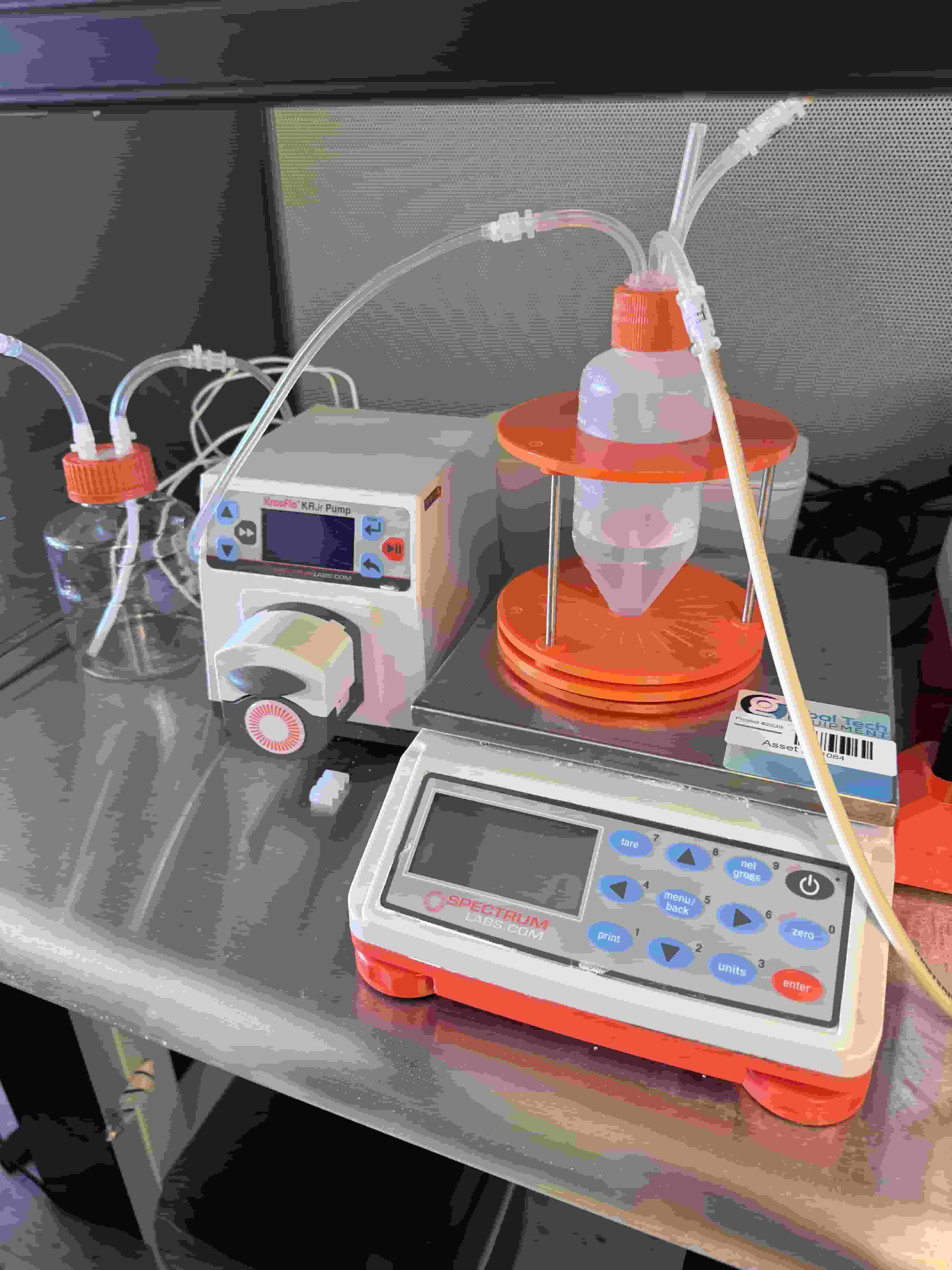
Integrated Balance:
The integration of a high-precision electronic balance is a significant highlight. It removes the need for an external balance and manual data recording, offering revolutionary convenience:
Real-time Monitoring & Data Logging: The system can monitor the permeate weight in real-time, automatically calculating the filtrate volume and filtration rate. This data is automatically recorded and can be used to generate graphs.
Precise Control of Concentration Process: Users can set a target concentration volume or concentration factor. Based on real-time feedback from the balance, the system can automatically stop the run, enabling endpoint automation for precise and reproducible concentration.
Automated Diafiltration (Buffer Exchange): During buffer exchange, the system can automatically and precisely add an equal volume of new buffer based on weight change, ensuring accuracy and high efficiency.
Dedicated Accessories:
The system usually comes with a comprehensive set of accessories, such as KrosFlow-specific TFF cassettes or hollow fiber modules, silicone pump tubing of various sizes, pressure sensor lines for connections, sample reservoirs, and necessary tubing and connectors. These optimized accessories ensure the system performs at its best.
2. Technical Features & Performance Analysis
Efficient TFF Principle: Unlike traditional dead-end filtration (where fluid flows perpendicularly through the membrane), TFF creates a high-velocity flow parallel to the membrane surface. This tangential flow continuously scours the membrane surface, carrying away particles that could clog pores, enabling the processing of samples with high solid content or viscosity while maintaining high flux over extended periods.
Critical Process Parameter Control: The KrosFlow system allows users to directly set and monitor key parameters like Transmembrane Pressure (TMP) and tangential flow rate. By optimizing these, users can find the optimal operating window, maximizing filtration efficiency while minimizing membrane fouling and sample denaturation.
User-Friendly Software Interface: The system software is typically intuitive, guiding the user through the entire workflow: from setup, membrane preconditioning, sample concentration, and diafiltration, to system cleaning and storage. Historical data can be exported for record-keeping and reporting.
3. Typical Applications
Protein Sample Preparation: Concentration and buffer exchange for monoclonal antibodies, recombinant proteins.
Viral Vector Purification: Concentration and purification of AAV, lentivirus, etc.
Exosome and Nanoparticle Research: Isolation and concentration of exosomes from cell culture supernatants.
Nucleic Acid Processing: Concentration and desalting of plasmid DNA, mRNA.
Cell Harvest: Harvesting of microbial or animal cells.
4. Summary
The KrosFlow Tangential Flow Filtration System (with balance, peristaltic pump, and accessories) is more than just equipment; it is a complete process development platform. Its highly integrated design merges the precise control of real-time weighing from the balance, the gentle sample handling of the peristaltic pump, and professional TFF technology into one unit. This significantly simplifies operations, reduces human error, and enhances experimental reproducibility and efficiency. For laboratories focused on bioprocess development and optimization, choosing the KrosFlow system means being able to advance projects rapidly with a lower barrier to entry and a higher success rate, making it an ideal tool for downstream processing at the laboratory scale.